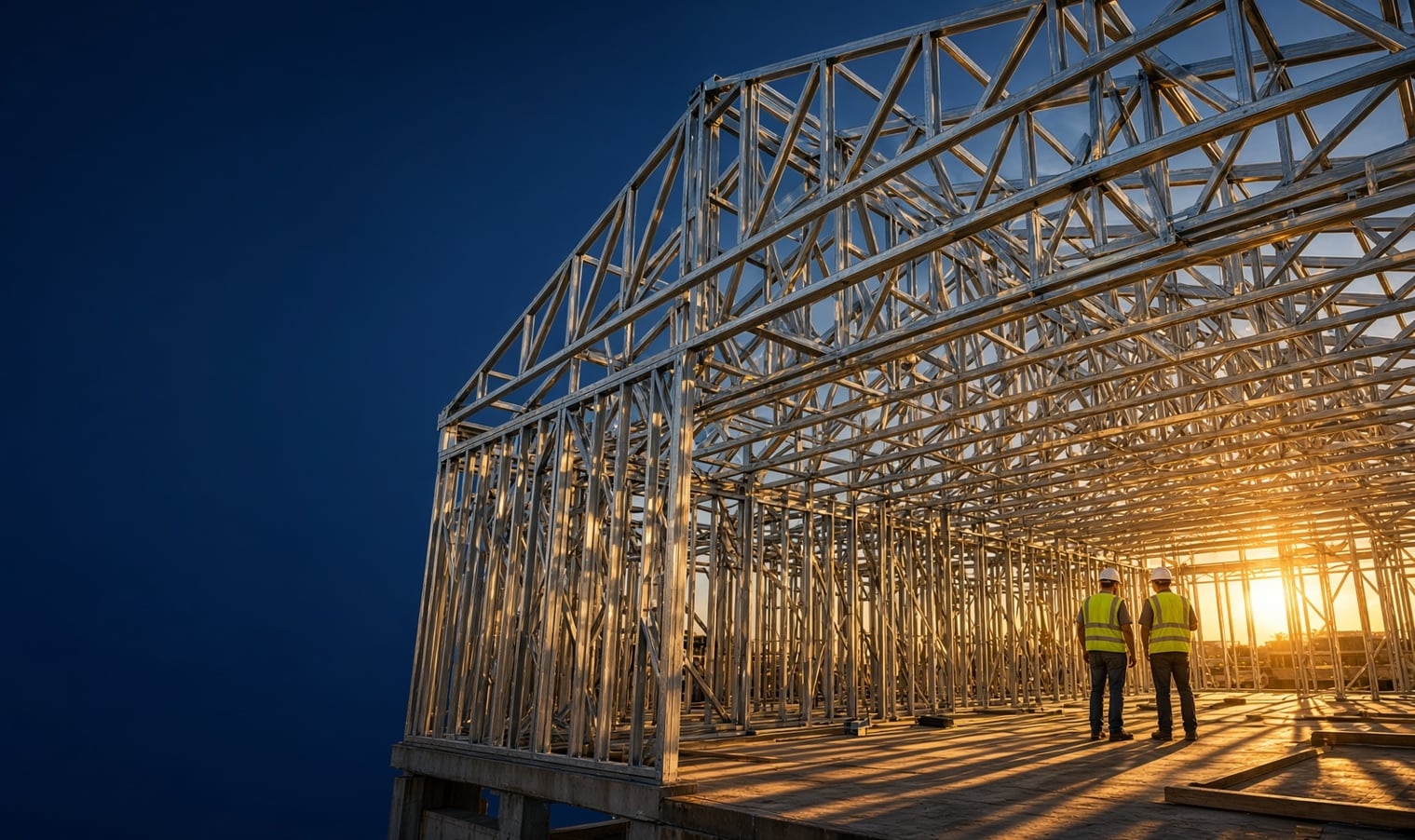
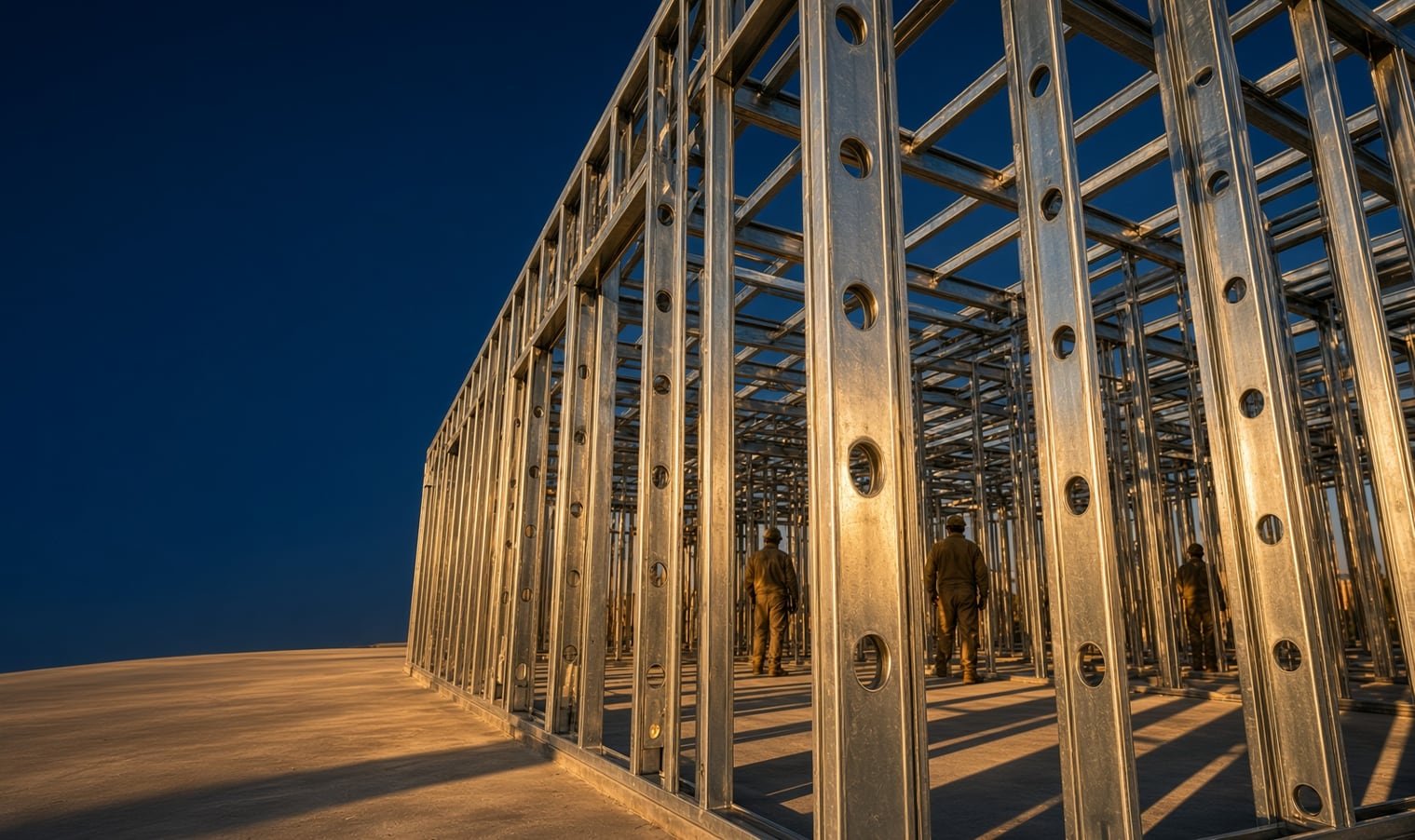
Ask an electrician or plumber about their first steel-framed job and you'll often hear the same thing: the holes were already there. Pre-punched service holes are one of the least glamorous features of light gauge steel framing, and one of the most useful.
What they are
As each stud and member is roll-formed, the machine punches holes at set positions along its length. Once the wall is assembled, those holes line up from stud to stud, creating clear paths for cables and pipes through the frame.
Why they save time
- No drilling or notching. Trades feed services straight through instead of cutting their own holes.
- No accidental damage. Holes are placed where the engineer allows them, so the frame isn't weakened by holes in the wrong place.
- Cleaner work. Grommets or bushes fitted to the punched holes protect cables and pipes from the steel edges.
Where they can't do everything
Standard holes suit typical cable and small pipe runs. Larger pipes, ducts and waste lines often need bigger, specifically positioned penetrations. Those can also be made in the factory, but only if the services layout is known before production.
Getting it right starts on paper
The best results come when the hydraulic and electrical layouts are reviewed alongside the frame design. Mark wet areas, waste positions, switchboards and any large ducts on the drawings early, and the frame can be made to suit them, with no cutting on site.
A tip for first-time crews
Brief your plumbers and electricians before they start. Show them the punched hole positions, explain which members must not be cut, and give them a contact for questions. A five-minute toolbox talk can save hours of rework.
Want your next frame made around your services? Send us your plans and we'll coordinate the penetrations before we roll a single stud.

Written by
Sudhir Patel
CADROLL


 Industry Insights