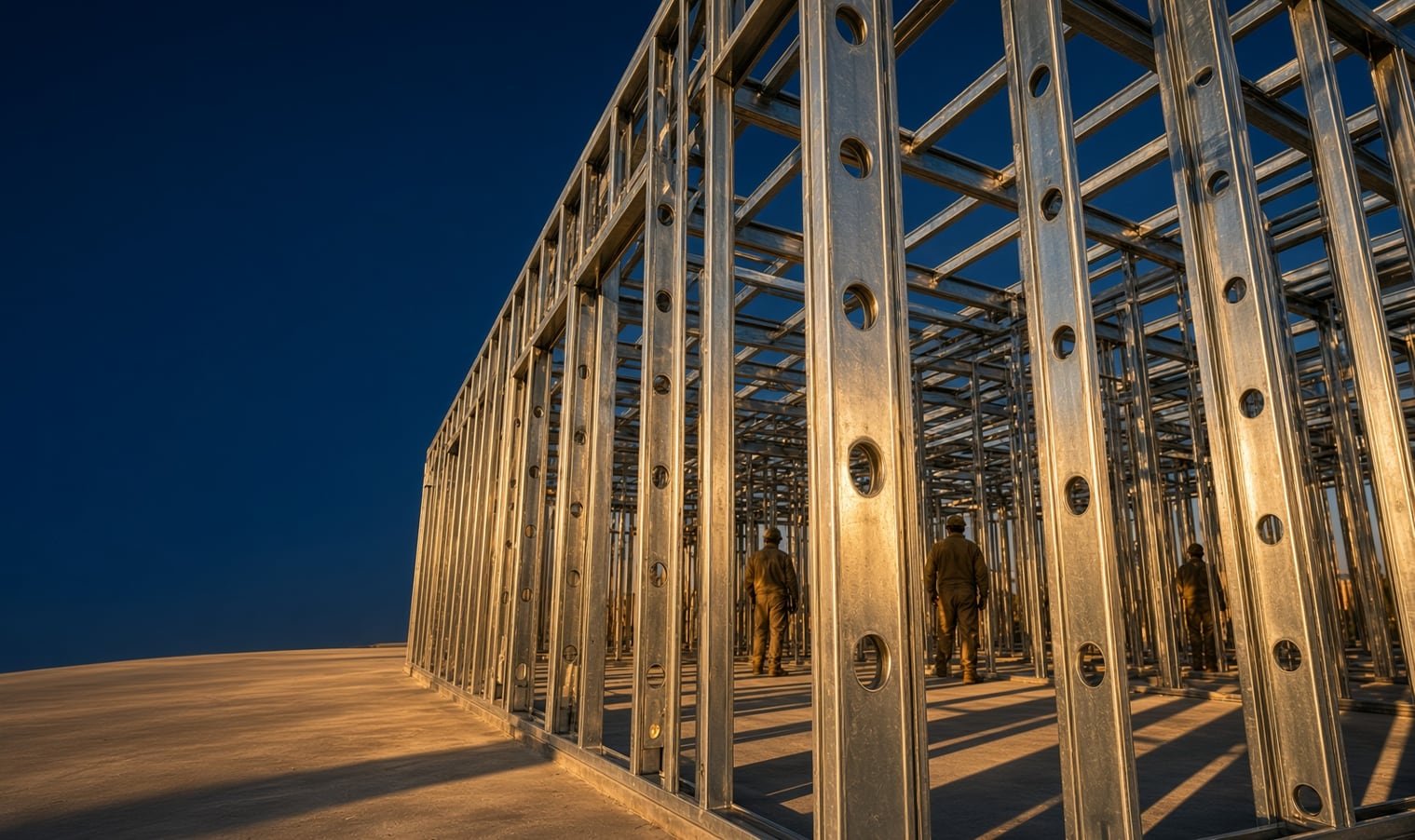
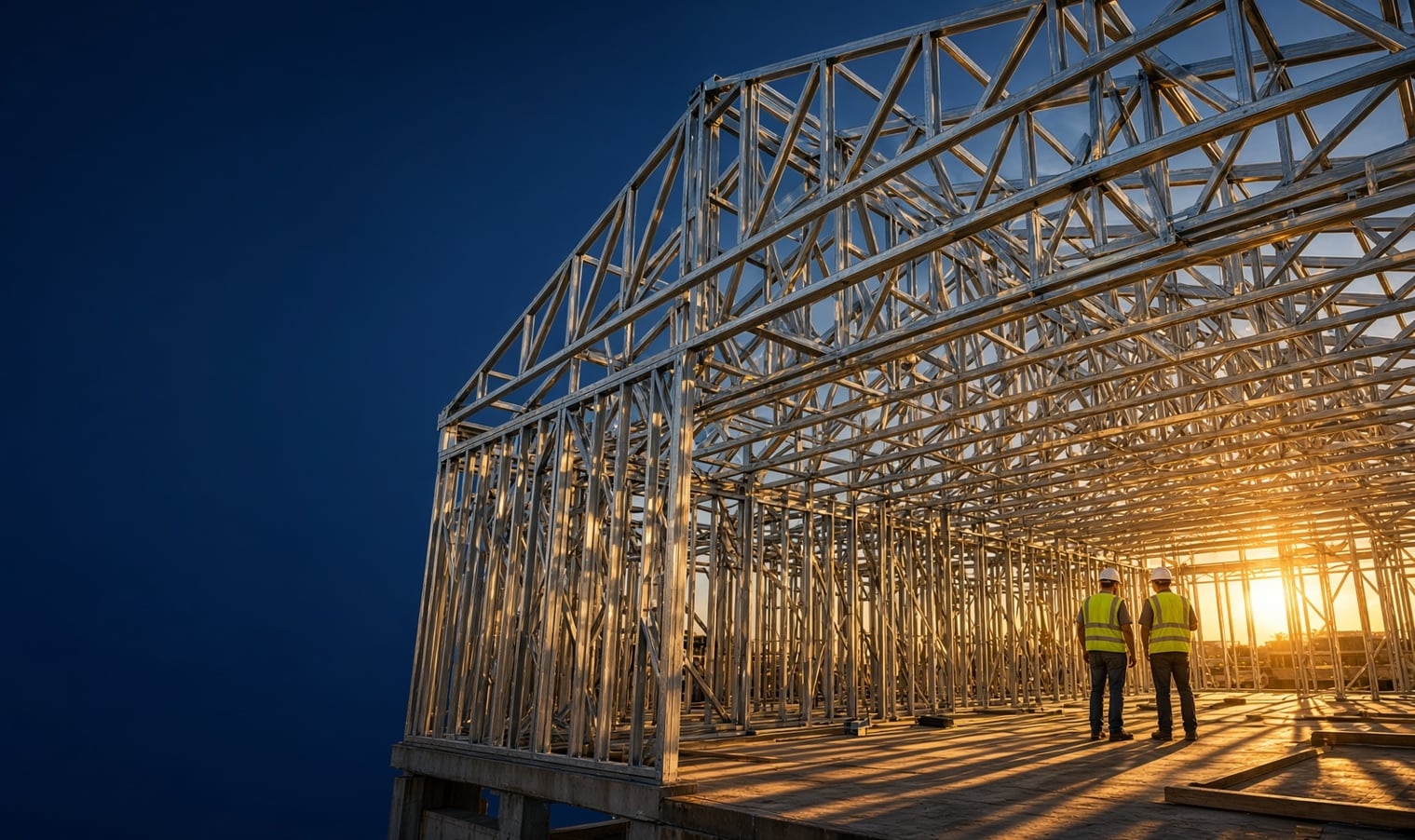
A floor cassette is simply a section of floor framing that's assembled in a factory instead of on site. Joists, edge members, blocking and any trimmers around openings are built into a panel, checked, labelled and delivered ready to lift into place. Once the cassettes are fixed and sheeted, you have a floor.
How a steel floor cassette is made
It starts with the structural design. The engineer sets joist sizes and spacings for the spans and loads, then the floor is modelled in 3D and broken into panels sized for transport and lifting. Each member is roll-formed to length, punched where services will pass through, and assembled on a jig so every cassette is square and true.
What changes on site
- Less cutting and measuring. The crew isn't setting out and fixing individual joists, so the floor goes down in a fraction of the steps.
- A flat surface. Steel joists don't shrink, twist or cup, so the substrate for flooring, tiles and wet areas stays level.
- Cleaner sites. Offcuts and waste stay in the factory rather than piling up on the slab.
- Safer work at height. Large sections of floor go in quickly, which reduces the time people spend working around open edges.
When cassettes make the most sense
Cassettes suit upper floors in houses and townhouses, suspended ground floors on sloping sites, and repetitive layouts such as multi-unit buildings where the same panel can be made many times. They are less suited to floors with lots of small, irregular openings that would turn every panel into a one-off.
Things to plan for
Because cassettes are made in advance, the floor layout, stair openings, set-downs for wet areas and major service runs need to be confirmed before production. Crane or lifting access also matters: a panel that's quick to install still has to get from the truck to its position safely.
Is it worth it?
For most multi-level projects, the time saved on site and the quality of the finished floor outweigh the extra planning up front. If you'd like to see whether cassettes suit your design, send us your plans and we'll show you how the floor would be broken down.

Written by
Sudhir Patel
CADROLL



 Industry Insights